
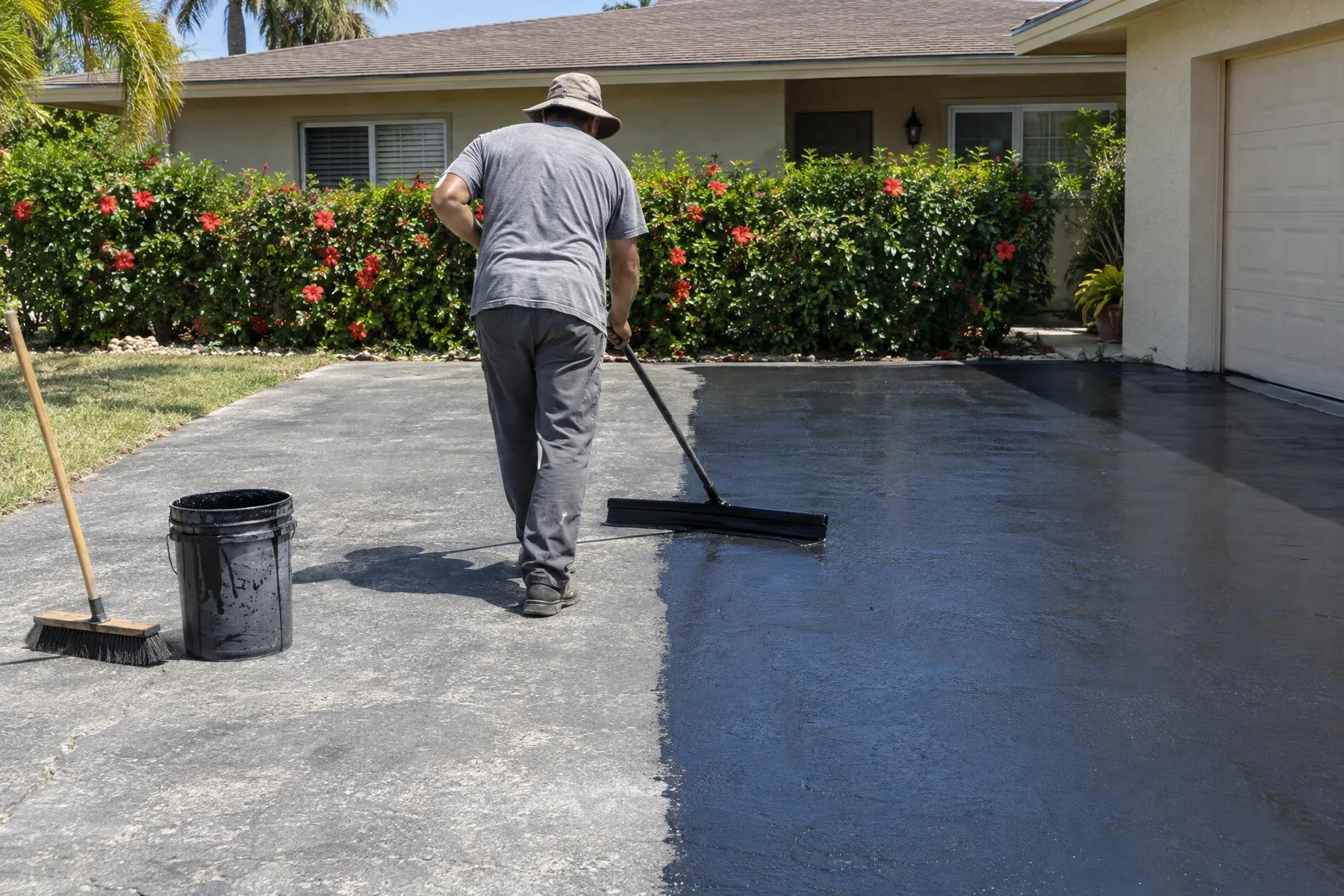
How Asphalt Paving Works: Why Lauderhill Pavement Cracks First
Visible asphalt is only a thin skin. A home driveway is built from 3 to 5 inches of asphalt laid over 4 to 8 inches of compacted rock, and that rock carries most of the load. Once water softens it, the asphalt flexes under tires, cracks and falls apart. Bad drainage, a weak base and thin compaction do the most damage.
Lauderhill’s ground raises the stakes. NRCS maps Boca, Basinger, Margate and Pompano fine sands here, and the water table can sit 6 inches from the surface in wet months. Limestone lies about 30 inches down under Boca and about 53 under Pennsuco. A base this close to water loses strength when soaked, so wheel paths crack first and potholes follow.
Rainfall adds to the strain. Between mid-May and mid-October, Lauderhill collects almost 70% of its annual rainfall. Any open crack lets that water reach the stone, which softens and washes out, so small cracks deserve quick attention. A South Florida paving contractor says the same about drainage, warning that skipping the fix means spending twice as much later. Good paving is mostly about what sits underneath. A smooth top means little unless the base, the drainage and the compaction are right, and those three decide whether the pavement is still smooth a decade from now.